This Indonesian article discusses pseudo-anonymity in Pr*ga, a chat app where users can interact without real identities but system accounts still store user activities. Many users unknowingly share real photos, risking data misuse and doxing, especially with web access increasing exposure vulnerabilities.
PowerShell Helper is a lightweight CLI tool built in 15 minutes using GitHub Copilot CLI that converts natural language descriptions into PowerShell commands with explanations. Solves the daily pain of context-switching between Bash-enabled terminals and PowerShell by translating familiar Bash workflows into PowerShell equivalents instantly.
react-native-turbo-base64 is a C++ Base64 library using JSI for React Native with zero bridge overhead and no memory copies. Built from profiling production apps where Base64 encoding/decoding consumed significant CPU in image, camera, and crypto workflows, it delivers multiple-times faster performance than react-native-quick-base64.
Burnout and depression feel similar but differ critically: burnout is situational and improves with rest, while depression persists regardless of circumstances. Burnout says “I can’t keep doing this” while depression says “I don’t see the point anymore”—and unchecked burnout can evolve into depression through sustained cortisol elevation.
Comprehensive guide to transforming messy data into actionable insights using Power BI. Covers the complete workflow from connecting data sources through Power Query cleaning, building star schema data models, writing DAX calculations, to creating decision-driving dashboards that translate complexity into clarity.
ArcticKey is a managed Valkey hosting service with 100% EU infrastructure (Lithuania servers, Swedish company) built for European developers tired of routing cache data through US services. Offers free tier, flat pricing, TLS by default, and Redis compatibility using the open-source Valkey fork.
Vendly is a testing-phase e-commerce platform for small businesses and non-technical sellers seeking simpler, more affordable online selling tools. This public build aims to validate demand, identify pain points, and learn what features sellers actually need—building in public to improve faster based on real feedback.
edittrack 2.0-beta introduces multi-line editing for managing multiple independent tracks in one workspace. Ideal for multi-day trips, alternative routes, route networks, and activity segments, it lets you create parts, switch between them, and edit individually while maintaining visual context of all routes simultaneously.
Analysts transform messy data into decisions through Power Query cleaning, data modeling with star schemas, DAX calculations, and dashboards. The workflow from removing duplicates and fixing formats to building KPIs and visualizations turns confusion into clarity and enables stakeholders to move from questions to action.
Neuron AI simplifies RAG implementation in PHP by handling document parsing, vector embeddings, and vector database storage. Instead of manually gluing libraries together, developers can build production RAG agents with built-in data loaders, embedding providers, and observability in just a few lines of code.
The Silence Weapon is a rational survival strategy in organizations where truth-telling becomes the highest-risk behavior. Through signal inversion, self-censorship optimization, escalation theater, and silent alignment, organizations engineer silence where bad news cannot travel upward—delaying but not hiding inevitable failures.
Average response time can hide serious performance issues affecting real users because outliers drastically skew results. Percentiles (P95, P99) reveal actual user experience by showing how fast responses were for most users, helping detect queue buildup, thread saturation, GC pauses, and bottlenecks that averages completely mask.
A tutorial on building a dynamic MCP proxy server using Python and fastmcp that acts as a single entry point for multiple MCP servers. Includes configuration persistence, dynamic mounting, and tools for adding and listing proxies.
A guide to preventing Kyverno policy conflicts through ownership patterns, RBAC controls, and guardrails. Emphasizes that every mutable field should have exactly one owning policy, with cluster-level enforcement to prevent future contradictions.
Event-Flo is an AI-powered conversational intake system for professional event planners handling complex multicultural celebrations. It uses Algolia’s Agent Studio for fast search and data retrieval, turning chat inquiries into structured searchable objects with qualification scores.
A comprehensive guide to implementing secure password reset functionality in Node.js using Express, MongoDB, and SendLayer for email delivery. Covers token generation, database models, email templates, security best practices, and troubleshooting common issues.
A freelancer built Invox, an open-source self-hosted invoicing app with Next.js 16, using Feature-Sliced Design architecture. Includes view tracking, recurring invoices, automated reminders, and optional banking integration via Salt Edge.
Explains why Kyverno policy conflicts happen in production due to undefined execution order across policies. Shows concrete examples of mutate-vs-mutate and mutate-vs-validate conflicts, and why these issues get worse at scale.
A guide to implementing responsive images for better web performance using srcset, sizes, and tools like unpic-vue and Nuxt Image. Explains how responsive images improve Core Web Vitals, SEO, and user experience by serving appropriate image sizes to different devices.
The author is launching their own newsletter “Build Signals” to publish content about Claude Code skills, LLM dev workflows, and solo product building. Content will be published there first before Medium.
An explanation of how async/await works in Dart, clarifying that “loading” doesn’t mean the app is frozen—it’s still running while one function pauses. The await keyword pauses a single function, not the entire program, allowing the app to stay responsive.
A thought experiment exploring how India building its own cloud infrastructure, AI chips, and LLMs could multiply GDP and reduce dependency on foreign tech. Argues that owning compute infrastructure is strategic leverage, not nationalism, and India has the talent to build it.
Agentic AI tools like Copilot and Cursor are transforming full-stack development by acting as tireless development partners that execute multi-step tasks and maintain context. Instead of grinding through boilerplate, developers now direct intelligent systems to scaffold APIs, generate tests, and build frontends in parallel—shipping usable products in days rather than months.
Startup Roast uses Algolia Agent Studio to provide brutally honest startup idea validation by analyzing concepts against 2,500+ YC startups and 403+ failed companies. The app delivers instant survival probability scores, market saturation analysis, funding likelihood, and specific pivot suggestions—all powered by sub-100ms retrieval and Google Gemini 2.5 Flash for fast, grounded feedback.
BigQuery Sharing (formerly Analytics Hub) enables live data exchanges across teams and partners without copying data, solving fragmentation problems that CSV dumps and ETL pipelines create. With VPC-SC support for security perimeters and real-time stream sharing, it provides millisecond retrieval, clean billing boundaries, and governance that traditional file sharing can’t match.
Every business should engage with AI at some level—the question is how deep. Starting with basic AI literacy training is low-cost and immediately beneficial, while AI-assisted workflows deliver consistent ROI without heavy infrastructure. The real mistake isn’t moving too slowly or quickly, but moving without understanding where you are on the adoption spectrum.
A Virtual Fashion Stylist built with Algolia Agent Studio provides instant outfit suggestions without chatbot conversations. Users select a clothing item and the app uses retrieval-driven styling with Algolia’s fast search to proactively suggest complementary items based on style compatibility, category relationships, and color harmony—creating a natural, app-like experience.
This guide shows how to build a custom pipeline that scrapes e-commerce product data and generates a Google Merchant Center-compliant XML feed for sites without native export buttons. Using BeautifulSoup and ElementTree, it demonstrates scraping, normalizing prices/URLs, handling namespaces, and automating feed updates with cron jobs.
This prototype treats LLMs as unreliable subsystems that must pass validation before output is accepted, using semantic similarity checks, tone adherence validation, and output format constraints. By wrapping AI inference in a fixed pipeline with hard thresholds and SQLite for stateless persistence, it behaves more like a deterministic backend system than a probabilistic chatbot.
WeeklyFoo #123 delivers a curated digest of 31 valuable web development links across AI adoption journeys, OpenClaw introductions, engineering career insights, new dev tools, and practical tutorials. Topics range from agentic engineering and subagents to CSS holographic effects and performance-optimized video embeds.
Traditional web scrapers fail silently when website layouts change, extracting garbage data that passes structural validation. This guide introduces the “AI Judge” pattern—using LLMs for semantic validation by comparing extracted JSON against raw HTML context to catch when scrapers pull “Free Shipping” text into price fields or extract sidebar data instead of actual product information.
After almost a year of work and a massive rebuild, the Hounty app (featuring a cute ghost character) has been submitted to the App Store for review. The developer is excited to finally show it off and hoping for quick approval.
A community organizer built Tech Atlas in just 4 hours using Algolia Agent Studio to solve Uganda’s tech information fragmentation problem. The platform uses AI-powered conversational search to help developers instantly find tech hubs, events, opportunities, and learning resources, replacing scattered WhatsApp groups and outdated repos with a single source of truth.
Software engineers are more important than ever in the AI era, just in a different way. Instead of writing code line by line, engineers now focus on understanding problems, designing systems, making decisions, and ensuring AI is fair, transparent, and safe—shifting from pure coders to problem solvers and ethical guardians.
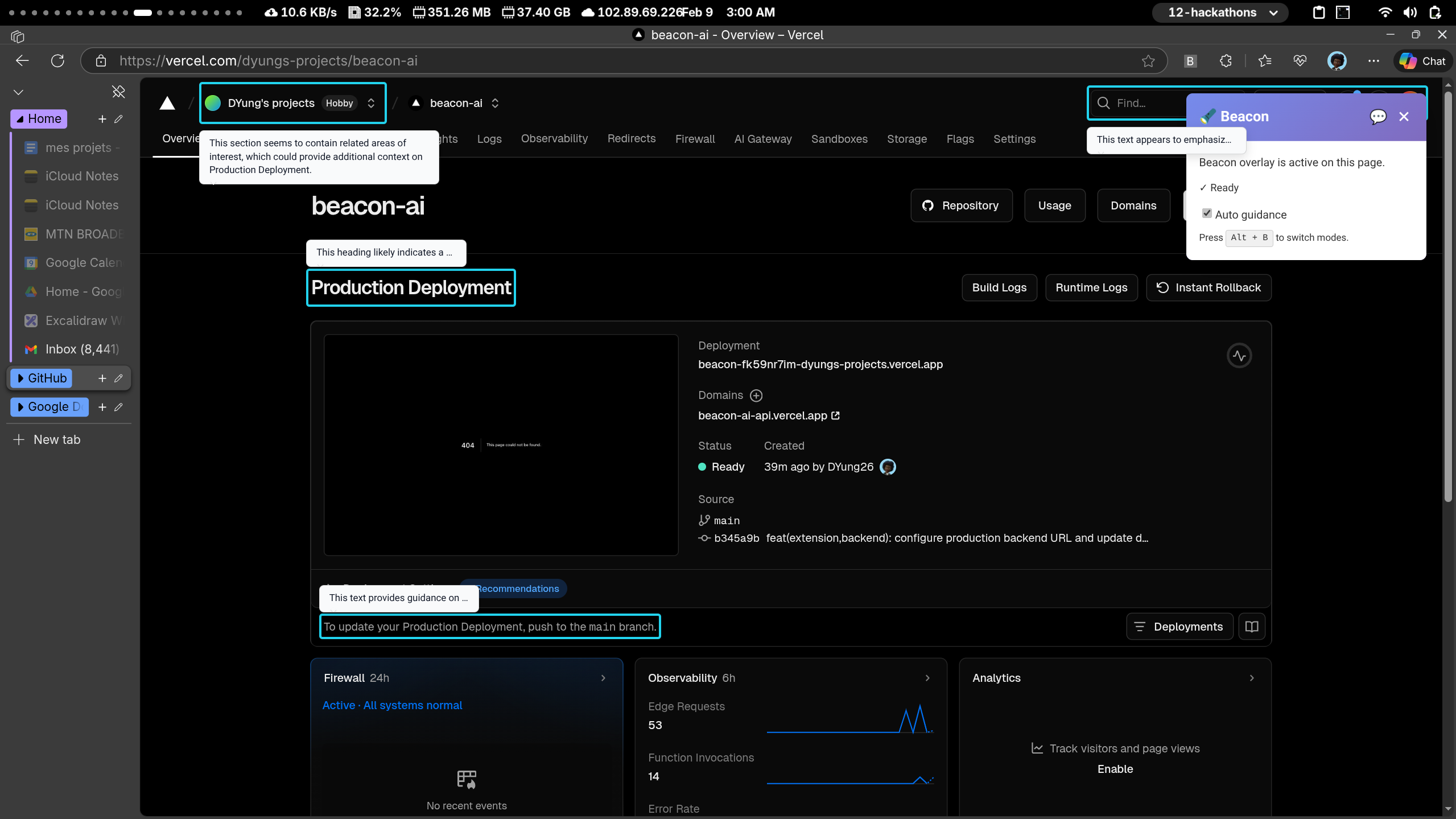
Beacon is a browser extension that proactively highlights relevant UI elements on webpages with contextual tooltips, eliminating the need to scroll, search, or chat with a bot. It indexes page structure (text, buttons, links, bounding boxes) into Algolia for millisecond-fast retrieval, then uses an AI agent to reason over results and decide what to highlight based on viewport and user context. An optional chat mode refines intent but the primary experience is ambient, non-conversational guidance that reacts to scrolling and page changes.
A full-stack developer shares how AI assists—but doesn’t control—their React/Next.js workflow in production environments. AI is used for scaffolding components, refactoring UI logic, generating TypeScript types, and reviewing backend code for edge cases, but critical decisions like rendering strategy, state management, auth logic, and performance optimization remain human-led. The key principle: AI is treated as a tool for faster iteration while maintaining clean architecture and accountability, not a replacement for engineering judgment on business logic, security, or performance-critical code.
GPU topology determines whether allocated GPUs run fast or get bottlenecked by PCIe/NUMA hops—especially on PCIe-only cards like L40S where bad scheduler placement causes NCCL all-reduce stalls and p99 latency spikes. Schedulers allocate GPU counts but ignore wiring, so you must encode topology into Kubernetes node pools with NUMA alignment or use Slurm’s —gpus-per-socket and —gpu-bind flags. Verify placement with nvidia-smi topo -m and benchmark with nccl-tests to catch topology regressions before scaling training workloads.
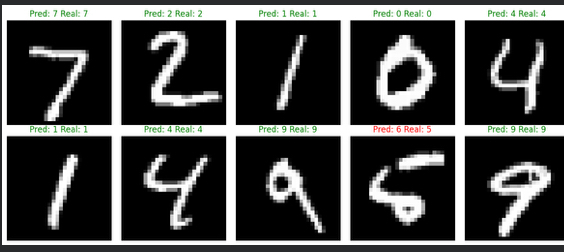
A 17-year-old high school student in Ghana built a handwritten digit recognition neural network from scratch using only a phone and Google Colab—no frameworks, just Python and NumPy with hand-coded forward pass, backpropagation, and gradient descent. The three-layer network (784-64-10) achieved 96% accuracy on MNIST test data after 20 epochs, scoring 0.947 on Kaggle’s Digit Recognizer competition. By implementing backpropagation manually rather than using TensorFlow or PyTorch, the student gained deep understanding of how weights adjust through error flow and matrix multiplication to minimize prediction loss.
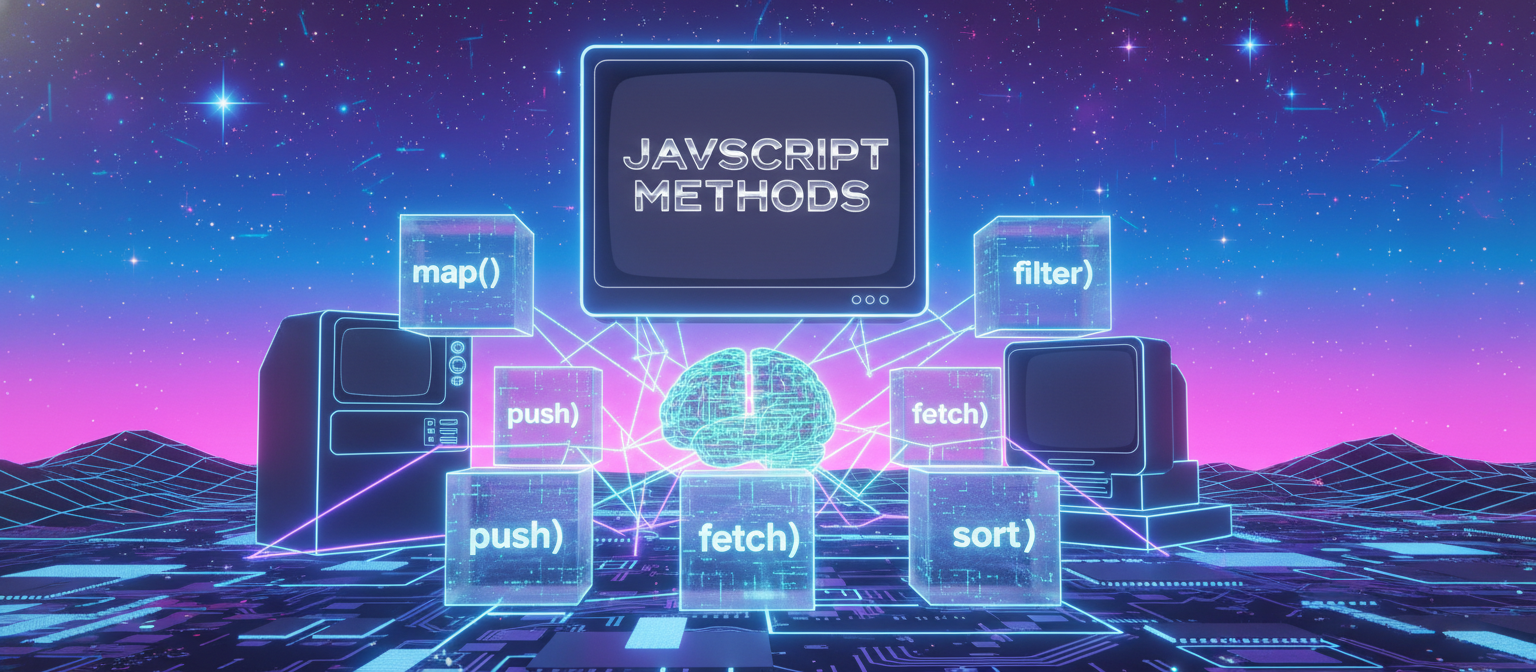
A comprehensive guide to essential JavaScript array methods covering manipulation, transformation, and access patterns. Learn how to use methods like push/pop, shift/unshift, slice, concat, flat, flatMap, and copyWithin to work with arrays effectively. Includes practical examples showing how each method affects the original array and what it returns.
Deploy DeepSeek-R1-Distill-Llama-8B locally using Ollama and Open WebUI via Docker Compose for private, zero-latency AI reasoning on consumer hardware. The 8B distillation achieves 89.1% on MATH-500 and 77.3% on MMLU while running entirely offline with no API costs or cloud dependencies. Docker orchestrates Ollama (inference engine) and Open WebUI (ChatGPT-like interface) over a private bridge network, with optional NVIDIA GPU acceleration for faster token generation.
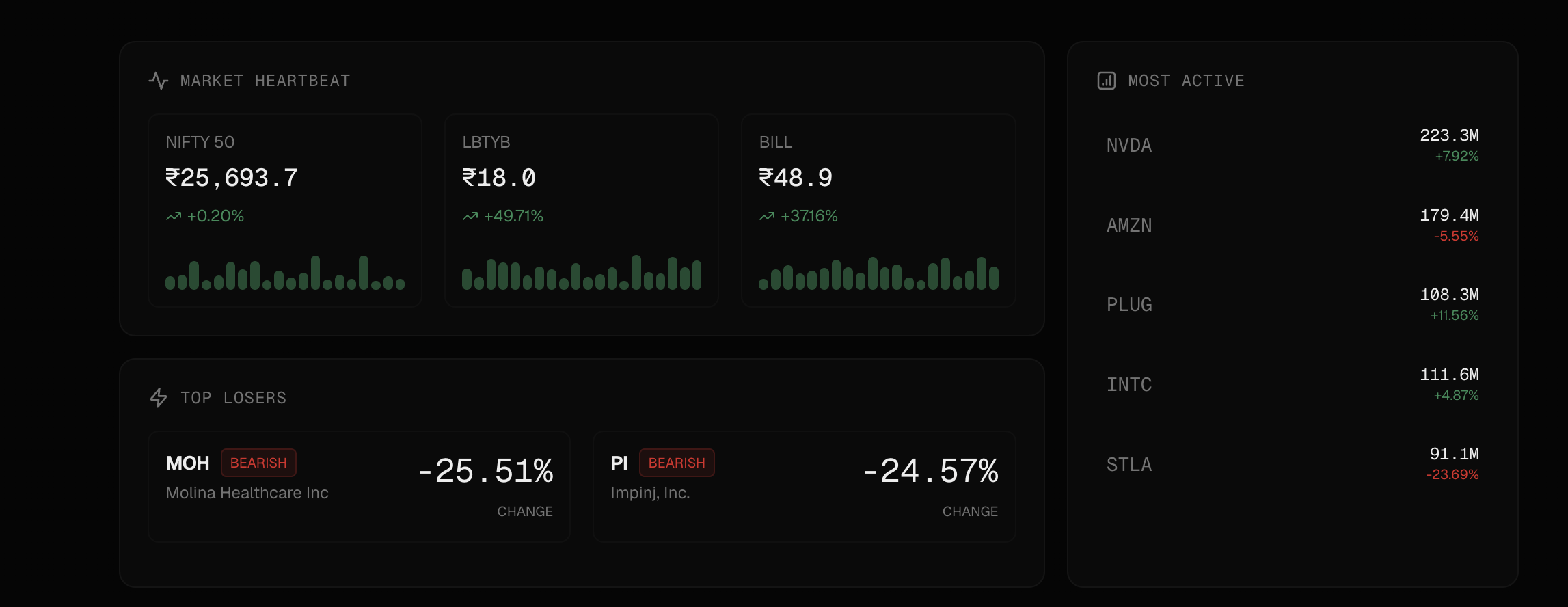
Red Flare is an AI-powered divergence detection platform that helps retail investors spot valuation, debt, and sentiment anomalies in NIFTY 500 and Nasdaq 100 stocks through natural language search. Built with Algolia Agent Studio for multi-index RAG, Query Rules for intent parsing, Yahoo Finance for real-time enrichment, and Upstash Redis for caching, it achieves 12-18ms search latency and generates risk scores with streaming AI analysis. The platform detects price/sentiment/fundamental mismatches and caches results for 6 hours to optimize repeat access.
Build production-ready AI agents in 50 lines of Python using Claude’s API with tool calling, multi-step reasoning, and guardrails. The article demonstrates three practical patterns: ReAct (Reason + Act) for structured thinking, scratchpad memory for context retention, and safety guardrails to prevent dangerous file operations. Move from passive prompt engineering to active agent development before AI automation replaces manual workflows.
A Rails 7.1 Action Mailer bug occurs when adding after_action callbacks to mailers that conditionally return Mail::Message or ActionMailer::Base::NullMail—the callback expands the mailer lifecycle and copies default values into a message object, causing “SMTP To address may not be blank” errors. The fix ensures backward compatibility by checking message.to.present? in the callback condition before merging custom SMTP settings. The author recommends moving business validation out of mailers into service objects, keeping the presentation layer focused on delivery configuration and content formatting.
Edge and distributed data centers reduce latency by cutting physical distance, hop count, and queueing—fiber propagation costs ~4.9µs/km, making 1,000km round trips cost ~10ms before routers and congestion. For LLM apps, edge primarily improves time-to-first-token (TTFT) by terminating TLS closer and reducing network latency, while tokens/sec depends on GPU/runtime efficiency. For video analytics, edge wins by processing frames locally and shipping only events/metadata upstream, avoiding expensive WAN bandwidth and delays from hairpinning every frame through distant regions.
Five practical AI coding patterns that genuinely improve developer workflow: describe requirements in plain language instead of coding, use AI as a rubber duck to challenge assumptions, write tests first then ask for implementation, iterate through refactoring chains rather than seeking perfect code upfront, and get instant code reviews by asking what would break in production. The key meta-lesson is that AI tools amplify existing developer knowledge rather than replacing it—the agent does the typing while you do the thinking.
A provocative take on how AI coding assistants are creating skill atrophy and false productivity in developers. The article argues that over-reliance on AI tools leads to developers who excel at prompt engineering but struggle with debugging, understanding codebases, and fundamental problem-solving, ultimately trading long-term engineering capability for short-term velocity.
Synapse AI Chat uses Knowledge Graphs (via Graphiti + Neo4j) instead of traditional vector RAG to give LLMs “deep memory” that understands causality and relationships, not just keyword similarity. Built for continuous conversations with a three-phase pipeline (conversation, ingestion/“sleep”, hydration), it compresses a 35k token master prompt down to 14k tokens while providing semantic structure and a visual memory explorer for human-in-the-loop corrections.
An apparel shopping site submission for the Algolia Agent Studio Challenge featuring a conversational chatbot for product discovery. Built with Algolia’s InstantSearch.js widget and 2000-item apparel dataset, the chat interface leverages searchable attributes (title, description, product type, color, categories, price, tags) to assist customers in finding products through natural conversation.
A submission for the Algolia Agent Studio Challenge featuring an apparel shopping site with a conversational AI assistant. The project uses Algolia’s InstantSearch.js widgets and leverages Generative AI to help customers find products through natural language prompts instead of traditional filters, with 2000 items in the sample dataset.
Syrius AI achieves 45% infrastructure cost reduction by using Rust’s zero-copy memory management for AI inference. The article demonstrates how Rust’s ownership model and Arc smart pointers eliminate data duplication, reducing memory pressure and maximizing hardware efficiency in AI clusters.
A developer’s candid story about spending 12 hours building custom HubSpot API automation to update meta descriptions across 300 pages, only to discover a spreadsheet-based tool (Smuves) that solves the problem better and empowers the entire team. The article highlights the lesson that just because you can build something doesn’t mean you should, emphasizing the importance of researching existing solutions before writing custom code.
A detailed journey of reviving a 2011 MacBook Pro 8,2 by upgrading through seven macOS versions (Snow Leopard to Sierra) while working around a faulty dedicated GPU. The author disabled the GPU via nvram and deleted Radeon drivers after each update to keep the machine running, ultimately achieving a working system—though Linux Mint provided a better overall experience.
A brief closure announcement for the CV Analyzer MERN app build-in-public series. The project has been completed and converted into a full portfolio piece with demo video and live deployment, with implementation outpacing the documentation cadence.
A comprehensive guide to implementing Claude (Anthropic) streaming API with Next.js Edge Runtime and Server-Sent Events. Unlike OpenAI tutorials, this covers Claude’s unique SDK event structure, proper SSE formatting, client-side buffer handling for partial events, and production considerations like usage metering, error handling, and performance optimization with sub-200ms time-to-first-token.
Buildmate automates the entire development workflow using specialized AI agents (PM, backend/frontend developers, testers, reviewers) that plan, implement, test, and review code through a single /pm command. The practical guide covers real usage patterns, agent customization, git workflows with automatic PR generation, and tips for maximizing the tool’s effectiveness while maintaining human oversight.
Five critical cloud cost pitfalls that newcomers face: poor instance selection from over-provisioning or mismatching workload types, wasted storage from using high-performance SSDs everywhere and never cleaning up snapshots, runaway networking costs from inefficient data transfers and egress charges, excessive security permissions that can lead to crypto-jacking and unauthorized bills, and unmanaged orphaned resources like idle instances and unattached load balancers. Strategic resource selection, data tiering, internal networking, security hardening, and regular resource audits can dramatically reduce cloud spending and prevent catastrophic bill shocks.
A concise, conceptual guide to 12 common code anti-patterns and their better alternatives, presented in pseudo-code to emphasize design principles over implementation details. Covers switch/if-else ladders (use lookup maps), magic numbers (use named constants), code duplication (extract shared logic), redundant state (derive instead of store), and God components (split responsibilities). The guide prioritizes clarity over cleverness and advises measuring before optimizing.
A deep-dive into optimizing Qwen3-VL’s Vision Transformer encoder by enabling torch.compile in vLLM, achieving a 3.4% throughput improvement on NVIDIA H200 GPUs. The article details the technical implementation, three bugs discovered and fixed during the process, and profiling results showing where compilation provides the most benefit.
An AI system that transforms proposal writing from a time-consuming manual task to an instant, automated process using Algolia Agent Studio. Users paste a job description, and the agent analyzes intent, retrieves the best-fit profile from an indexed database of freelancer expertise, and generates a personalized, first-person proposal in seconds. Fast retrieval (milliseconds) makes the experience feel conversational rather than slow and interruptive.
A second Algolia Agent Studio Challenge submission exploring conversational navigation through indexed data. The system features two interfaces: “Ask AI” for direct retrieval and “Ruckus 2.0” for exploratory conversation, both grounded in the same indexed records. The key insight: chat doesn’t replace search—it reveals it, one step at a time, by helping users decide which question to ask next.
A deep technical dive into what happens when you press “Enter” in your browser, exploring Internet infrastructure from a top-down approach. The article breaks down Internet protocols, physical layer technologies (copper, fiber optics), circuit vs packet switching, and the four delays that affect network performance (processing, queuing, transmission, propagation).
A developer troubleshooting EAS Update issues in a bare React Native project where published updates appear correctly in the Expo Dashboard but aren’t downloading to production builds installed via TestFlight. The post includes detailed configuration files and asks the community for help identifying the issue.
Software entropy—the level of chaos in any system—is inevitable and increases with every feature, bug fix, or change, regardless of code quality. Even perfect implementations add essential complexity from evolving domain requirements. The article draws from the Tao of Programming to argue against analysis paralysis: instead of seeking perfect decisions or perfect code, developers should make good-enough choices, ship, and flow with entropy. Refactoring can mitigate but never eliminate the long-term upward trend of complexity.
A real-time file validation tool that prevents extension spoofing attacks by monitoring file creation/modification and validating file extensions against magic numbers to detect malware disguised as legitimate files. The tool uses inotify or watchdog for monitoring, automatically quarantines mismatched files, outputs SIEM-ready JSON logs compatible with Splunk/ELK/Wazuh, includes SHA256 hashing and user attribution, and is designed for protecting web server uploads, shared drives, and meeting compliance requirements like PCI-DSS file integrity monitoring.
A detailed walkthrough of extending Robert Nystrom’s jlox interpreter with support for lists and for-in loops. The implementation covers parsing square brackets, handling subscript expressions, implementing list operations (push, pop, len), and desugaring for-in syntax into while loops. The author reflects on how breaking down complex problems into simpler primitives makes them solvable—a lesson from both compiler design and life.
Kamal 2 bridges the gap between expensive PaaS platforms and complex cloud infrastructure, enabling solo developers to deploy production-ready apps to cheap VPS servers with automatic SSL, zero-downtime deployments, and database management—all for around $5/month instead of $250+. The guide walks through complete setup from initialization to deployment with built-in rollback capabilities.
Introduction to mask-token, a TypeScript utility that safely masks sensitive API tokens while preserving developer ergonomics. The library recognizes 40+ token formats (GitHub, npm, Stripe, AWS, OpenAI, etc.), supports JWT segment masking, includes metadata extraction, and helps maintain GDPR compliance without exposing sensitive values in logs or UIs.
Git’s line-based diff3 merge algorithm produces false conflicts in 52% of scenarios where independent changes occur in the same file, a problem exacerbated by AI agents making parallel code changes. The solution is entity-level semantic merging using tree-sitter to parse code into functions/classes and merge at that granularity, achieving 100% clean merges on the same 31-scenario benchmark where Git only manages 48%, implemented as the open-source Weave merge driver that drops into existing Git workflows while supporting 15 languages and falling back to line-based merging for unsupported files.
A submission for the Algolia Agent Studio Challenge that reimagines a developer portfolio by treating decisions as indexed data rather than narrative prose. The project uses atomic records optimized for retrieval, hierarchical tags, and deterministic sorting to create a searchable journal of projects, struggles, and decisions that scales with complexity and survives constant experimentation.
A comprehensive hands-on workshop with six practical exercises targeting common code anti-patterns in React and TypeScript. Covers refactoring God Components, eliminating magic numbers, replacing switch statements with configuration objects, fixing prop drilling with Context, and improving error handling with proper state management. Each exercise includes before/after examples, step-by-step guides, and solutions demonstrating SOLID principles and modern React patterns.
An exploration of the analyst’s role in transforming messy, ambiguous data into decision-ready insights using Power BI. Covers data curation, transformation, DAX as opinionated business logic enforcement, and dashboard design principles that reduce misinterpretation risk and make conclusions obvious to users.
Guide to Power BI workflow from data cleaning to actionable insights. Covers Power Query for data transformation, DAX formulas for calculations, and dashboard design that enables data-driven decision making.
A zero-config CLI tool that eliminates RAG boilerplate: just run rag-cli index ./docs/ and rag-cli ask "your question" to query any folder of PDFs, Markdown, or text files. Built with ChromaDB for local vector storage, Typer for CLI ergonomics, and a modular architecture split into three reusable packages (llm_core, rag_core, rag_cli) designed for easy extraction into other projects. Supports both local Ollama models and cloud APIs, with full test coverage and smart design decisions for offline-first, zero-setup operation.
Daily JavaScript tips covering performance, language quirks, React, Angular, and more in 2-minute consumable format. Community-driven resource for sharpening JS skills. Available at jstips.co.
An Algolia Agent Studio Challenge submission introducing FormAgent, a tool that automates repetitive form filling by searching documents. The system uses Minio S3 as a data lake, Langchain with Groq API to transform unstructured PDFs into structured JSON, and Algolia as an index database to enable fast retrieval of answers from documents like CVs for filling Google Forms.
An exploration of the shift toward Small Language Models (SLMs) under 10B parameters for specialized tasks, emphasizing a “task-first” architecture approach. The article argues that smaller, locally-run models offer instant response times, better privacy, and superior cost-efficiency compared to large cloud-based models for most production use cases.
A mock interview Q&A covering Java fundamentals and career transition from mechanical engineering to IT. Topics include Java compilation and execution, control flow statements, and multiple switch-case examples demonstrating fall-through behavior, default clause placement, and the newer arrow syntax introduced in modern Java versions.
Nani is a smart grocery platform submission for the Algolia Agent Studio Challenge featuring AI chatbot and recipe suggestions. Algolia’s sub-100ms retrieval speed enables instant stock verification, turning conversational interactions into a seamless cart-building experience that feels proactive rather than reactive.
A hands-on lab for setting up Jenkins Multibranch Pipeline with GitHub webhooks, covering automatic branch discovery, per-branch builds, and PR workflows. The tutorial demonstrates why companies need multibranch pipelines: they enforce CI for every branch, enable PR-based workflows, and eliminate manual job management with pipeline-as-code that matches real GitHub workflows.
A practical guide to Nim configuration, compilation options, and the Testament testing framework. Covers essential Nimble commands, compiler switches, and best practices for building and testing Nim projects. Includes detailed examples of config files, backend targeting, and memory management options.
A 3-month personal learning challenge combining English language acquisition and data science skill advancement. The author documents their structured approach using principles from “Ultra-aprendizado” and “Lifelong Kindergarten,” committing to 10 hours weekly study, daily documentation, and specific goals including Databricks certification, GitHub portfolio structuring, and English proficiency milestones.
An honest, sobering look at how AI has fundamentally changed the software engineering job market for entry-level developers. The traditional learning ladder (junior work → experience → senior) has collapsed as AI automates the grunt work that once trained newcomers. The bar for entry has skyrocketed from “6 feet” to “20 feet with barbed wire and fire,” requiring exceptional drive, deep technical understanding, and extensive networking just to get in the door.
A detailed exploration of B+-tree search and search-next operations in SQLite. Explains the deterministic root-to-leaf search algorithm, binary search at leaf nodes, and how SQLite handles ordered traversal without leaf links by walking up the parent chain and descending to find logical successor leaves.
A vibe-first podcast discovery platform that lets users search by feeling instead of keywords—tap “dopamine hit 🧃” or “main character energy ⭐” to get curated episode recommendations. Built with Next.js and Algolia Agent Studio, it translates emotional vibes into search intent, retrieves relevant episodes in milliseconds, and uses strict prompt engineering to ensure diverse, high-quality results. The system ingests Apple iTunes podcast data into Algolia and leverages fast retrieval for instant, conversational recommendations.
NullUpload is a privacy-first image processing toolkit that runs entirely in the browser using Canvas API and WebAssembly, requiring zero server uploads, no tracking, and no user accounts. The open-source tool offers image compression, format conversion (JPG/PNG/WebP/AVIF), resizing, and EXIF metadata stripping with GPS location warnings, with all source code publicly available for verification on GitHub.
A detailed walkthrough of building a production-ready RAG system on Azure AKS for $40/month, featuring complete document ingestion pipeline, hybrid search with Azure AI Search, GPT-4o-mini for generation, in-cluster Redis caching, and full observability with Prometheus/Grafana. The architecture uses Azure CNI Overlay networking, NGINX Ingress with internal load balancer, KEDA for autoscaling, and runs 13 pods on a single B2s node, with infrastructure as code using Terraform, Helm deployments, and comprehensive cost breakdowns showing fixed infrastructure at $40.17/month plus minimal AI costs under $1/month at development scale.
A practical guide to building a high-performance personal health analytics dashboard using DuckDB and Streamlit to process gigabytes of Apple Health export data. The tutorial demonstrates how to convert Apple’s XML export into optimized Parquet format and leverage DuckDB’s columnar database for millisecond-level query performance.
A guide to using AI Builder’s new grounded prompts feature to query Microsoft Dataverse tables directly with natural language. The article details building a semantic search agent that takes user queries, cleans knowledge base data (stripping HTML, handling duplicates), applies rule-based relevance scoring, and returns high-confidence results (≥0.80) in strict JSON format. This enables smart, data-aware automation for summarizing proposals, checking statuses, and surfacing KB articles within Power Platform workflows.
A practical comparison of serverless and containers in 2026, focusing on real trade-offs rather than marketing hype. The article argues that the best systems intentionally mix both approaches: serverless at the edges for speed and event-driven workloads, containers at the core for predictable performance and control. Most teams that insist on “one runtime for everything” regret it within a year.
A step-by-step guide to configuring Network UPS Tools (NUT) on Proxmox for monitoring UPS status and triggering automated actions. The tutorial covers SNMPv3 setup on an APC UPS, NUT installation and configuration, and a custom bash script that sends Telegram notifications when the UPS switches to battery or low-battery mode. Includes automatic graceful shutdown when power is critically low.
Most age calculators fail because they don’t account for edge cases like leap years, February 29 birthdays, and JavaScript’s month-end date arithmetic quirks (like “Jan 31 + 1 month = March”). This guide presents a robust algorithm that normalizes dates to midnight local time, defines a consistent Feb 29 policy, calculates full years by checking if the birthday has occurred, walks forward month-by-month with proper day-of-month clamping, and includes comprehensive tests for edge cases like month-end transitions and leap year birthdays.
Modern AI models can now solve reCAPTCHAv2 with 100% accuracy, rendering traditional CAPTCHAs obsolete. This article introduces isHumanCadence, a privacy-focused library that analyzes keystroke timing patterns (not content) to detect bots by measuring biological constraints like dwell time, flight time, rollover rate, and entropy—though sophisticated AI will eventually learn to mimic these patterns too.
A comprehensive guide to the future of Go network programming covering emerging protocols like HTTP/3/QUIC for faster connections, gRPC for efficient microservices communication, and cloud-native patterns with service meshes like Istio. The article provides practical code examples for connection pooling optimization, bidirectional streaming, timeout handling with context, and includes a real-world case study of building a high-performance e-commerce API using Fiber, gRPC, Redis caching, and Kubernetes deployment with Prometheus monitoring.
TimeSlipSearch is a conversational search engine that answers natural language queries about pop culture history in under 100ms, searching across 420,000+ indexed records including Billboard Hot 100 charts, movie releases, gas prices, and historical events. Built with Algolia’s multi-index parallel search, Next.js, and natural language date parsing, the retro VHS-styled interface supports queries like “Summer of ‘69” or “the day the Berlin Wall fell” and includes era-aware context generation, localStorage-based memory for search history and favorites, and sub-100ms response times essential for maintaining conversational flow.
A comprehensive overview of modern “vibe coding” platforms like Rocket.new, Emergent.sh, Lovable, v0, and Bolt.new that let you build full-stack applications using natural language prompts. These AI-powered tools handle frontend, backend, databases, and deployment, making them ideal for indie hackers, founders, and developers who want to move fast without writing everything from scratch.
An educational project comparing two approaches to AI image recognition: Teachable Machine (predictive AI trained with examples) and Google AI Studio (generative AI using text prompts). The author trained both systems to recognize four objects (Steve Jobs figure, Linux penguin, remote control, and Apple Watch) and compared their accuracy and ease of use.
A comprehensive tutorial for building a unified health data dashboard that aggregates metrics from multiple sources (Oura Ring, Apple Watch, CGM) to visualize correlations between sleep, activity, and glucose levels. The guide covers the complete data pipeline using SQLAlchemy for database integration, Pandas for time-series alignment and resampling of heterogeneous sampling rates, and ECharts for interactive visualizations with zoom capabilities, enabling users to discover patterns like how sleep quality affects blood sugar levels through data-driven insights rather than guesswork.
Verdict is a decision engine for the Algolia Agent Studio Challenge that resolves conflicting customer support policies by retrieving relevant clauses, detecting contradictions, and applying a resolution hierarchy to produce structured verdicts with full citations. Unlike chatbots, it provides instant click-to-ruling decisions with transparent policy comparisons, leveraging Algolia’s custom ranking and Rules for precise retrieval before LLM reasoning.
Vibe Travel Planner is an Algolia Agent Studio Challenge submission that demonstrates contextual AI assistance without requiring typed conversations. Features include vibe-coded map markers (color-coded by destination mood), contextual popups with indexed data, smart trip wizard, score-based visual indicators, and multi-city itinerary building—all powered by Algolia’s sub-100ms retrieval making the experience feel native rather than AI-powered.
A detailed account of building a Container-as-a-Service platform from scratch to solve datacenter migration challenges. The platform uses Terraform on AWS EKS, ArgoCD for GitOps, Cilium for networking, and enforces security by default with RBAC and network policies. The key insight: platform engineering is product work, not infrastructure work—success is measured by how many teams are shipping on it and how fast they can go.
A developer relaunches their blog as IgorIOT, shifting focus from general development to Java and Raspberry Pi hands-on projects, while moving Apache Kafka content to a separate dedicated space. The new blog will also explore Java in Education initiatives, aiming to make Java more accessible to students and educators through modern tools and practical approaches.
A real-world debugging case revealing how Bing treats URL canonical signals far more strictly than Google. While Google often auto-clusters inconsistent URLs (with/without trailing slashes), Bing delays canonical selection until all signals align across sitemap, canonical tags, og:url, internal links, and redirects. The post provides a detailed production checklist with Nginx redirect rules and validation methods to fix indexing delays caused by URL inconsistency.
Explores why JavaScript became the web’s dominant language over C++ despite being less powerful. JavaScript’s sandbox security, lightweight footprint, and developer accessibility made it ideal for the resource-constrained early web, while C++‘s power posed security risks and performance challenges for 1995 hardware.
A game design review analyzing “Rat with a Gun,” a physics-based platformer built in one week. The review highlights how simple mechanics like recoil-based movement and a clever reloading system create organic difficulty sliders, while emphasizing that “game feel” and juice (satisfying feedback loops) are just as important as complex systems in successful prototypes.
This article explores how data analysts use Power BI to transform messy, chaotic data into actionable insights that drive million-dollar business decisions. It covers real-world examples of retail, healthcare, and manufacturing companies that saved millions by using dashboards to identify inventory issues, bottlenecks, and predict equipment failures. The key formula is clean data (Power Query) + smart calculations (DAX) + clear visuals (Dashboards) = business impact.
A practical guide to implementing idempotent delete operations in Django by correctly filtering queries and using transactions. The article demonstrates how a simple bug (missing the id= parameter in filter) prevented state changes, and how fixing the query naturally made the endpoint retry-safe without additional conditional logic.
An effective AI-powered knowledge system prioritizes decision support over storage by treating knowledge as a graph (not lists), indexing by context instead of folders, and versioning thinking/assumptions alongside documents. The architecture separates capture, organization, and use layers, with AI handling synthesis and pattern detection while keeping humans in charge of meaning—making past thinking usable exactly when decisions need to be made.
A concise tutorial for installing and configuring BEES (Best-Effort Extent-Same) deduplication on Ubuntu 24.04, covering prerequisites, compilation from source, UUID setup, and systemd service enablement. Quick commands to get automatic block-level deduplication running on Btrfs filesystems.
IntentRefiner is an AI agent built with Algolia Agent Studio that automatically converts vague user complaints into clear, actionable intents for support workflows. It uses historical issue data to detect patterns and outputs structured JSON for routing and resolution, improving support team efficiency without requiring conversational back-and-forth.
Page4U is a platform for deploying landing pages via a single command, featuring both a CLI tool and an MCP server that lets AI assistants like Claude and Cursor deploy pages mid-conversation. It automatically injects contact forms, handles lead tracking, and integrates with CI/CD pipelines.
io_uring (introduced in 2019) revolutionizes Linux I/O by replacing epoll’s expensive per-connection syscalls with batched submission/completion queues that enable true asynchronous operations. Combined with Rust’s memory safety guarantees, frameworks like compio are building cross-platform completion-based runtimes, though ecosystem integration challenges remain with std::io traits expecting mutable references instead of ownership.
Doug Parker from Angular’s team shared Google’s new Micro Frontend approach using complete isolation (no shared dependencies) and Protocol Buffers for messaging between autonomous apps. The episode also covers TypeScript 6.0 transitioning to maintenance mode before the v7.0 Go rewrite (targeting 10x performance), and Angular DevTools updates to the Signal Graph visualization for better resource grouping.
OLSRT v1.2 is a lightweight (~90 KB) runtime written in C that provides actors, async I/O, and green threads to any programming language via FFI. The upcoming v1.3 will introduce HCR (Hot-Coding References), a new concurrency paradigm that creates lightweight branches for processing data without blocking the main program.
For Raspberry Pi router shields like the DFRobot DFR0767 stuck on old firmware (21.02.3), this guide shows how to build custom OpenWRT images using the firmware selector with required hardware-specific packages (kmod-r8169, kmod-usb-dwc2, bcm27xx-userland). The method enables upgrading to the latest OpenWRT while maintaining full hardware functionality including secondary ethernet ports.
This tutorial extends Rust MCP servers with API key authentication using the official rmcp SDK, demonstrating how to build, test, and deploy a system information tool that validates keys against Google Cloud. The guide covers the complete workflow from local Rust development and Gemini CLI integration via stdio transport to production deployment as protected Cloud Run endpoints.
Skill Seekers v3.0.0 is a Python tool that converts documentation into 16 different formats for AI systems, including LangChain, LlamaIndex, and various vector databases. With 26 MCP tools, cloud storage support, and CI/CD integration, it eliminates the need to write custom scrapers for RAG pipelines and AI coding assistants.
This article explores the concept of immutable proxy objects in OOP, arguing that good objects should animate data rather than map it. It demonstrates how to separate object identity from state by using immutable proxies that manipulate external mutable storage, with Java examples showing the decorator pattern for caching and UI behavior.
OpenAI’s Whisper API delivers near-human accuracy for speech recognition at just $0.006 per minute, handling accents, noise, and technical jargon effectively. The guide covers basic implementation in 5 lines of Python, chunking strategies for the 25MB file limit, and chaining Whisper with GPT-4 to create smart workflows like automated meeting summaries with action items.
This comprehensive guide explains that most Windows crashes trace back to power delivery, heat issues, RAM failures, or storage problems rather than software bugs. It provides a disciplined troubleshooting approach focusing on hardware fundamentals first, followed by structured OS repair using tools like JENI to clean corrupted caches and rebuild damaged system components.
OpenAI outlines its approach to AI localization globally, introducing Model Spec “red-line principles” that maintain safety standards while allowing cultural customization. The company is piloting localized ChatGPT versions, including one for Estonian students, while ensuring core safety guardrails cannot be overridden regardless of local customization.
OpenAI classifies GPT-5.3-Codex as the first model with “High capability” for cybersecurity under their Preparedness Framework, triggering enhanced safeguards. The model combines GPT-5.2-Codex’s coding performance with GPT-5.2’s reasoning capabilities while being treated as High capability for biology and activating a layered safety stack for cyber defense.
GPT-5.3-Codex debuts as OpenAI’s most capable agentic coding model, combining GPT-5.2-Codex’s frontier coding with GPT-5.2’s reasoning while running 25% faster. The model achieves state-of-the-art on SWE-Bench Pro and Terminal-Bench, can build complex games autonomously over days, and was instrumental in optimizing its own development and deployment process.
OpenAI introduces Frontier, an enterprise platform for building, deploying, and managing AI agents with shared business context and governance. The platform gives AI coworkers access to enterprise data, tools, and memories while providing identity management, permissions, and evaluation capabilities across existing systems without requiring replatforming.
OpenAI launches Trusted Access for Cyber, an identity-based framework to give defensive security researchers priority access to GPT-5.3-Codex’s advanced cyber capabilities. The program includes $10 million in API credits for vulnerability research while implementing safeguards against malicious use through automated monitoring and user verification.
GPT-5 partnered with Ginkgo Bioworks to optimize cell-free protein synthesis through autonomous lab experimentation, achieving a 40% reduction in protein production costs. Over six rounds of closed-loop testing across 36,000+ reactions, the AI-driven system discovered novel reagent combinations that outperform traditional methods in high-throughput lab conditions.
OpenAI details the Codex App Server architecture, a JSON-RPC protocol that exposes the Codex harness to clients across CLI, IDE, and web platforms. The App Server evolved from internal tooling into a stable platform for partner integrations, managing thread lifecycle, config/auth, and tool execution while providing conversation primitives (items, turns, threads) for building rich UI experiences.
OpenAI outlines Sora feed’s core principles: optimizing for creativity over passive scrolling, giving users control through steerable ranking, and balancing safety with creative freedom. The recommendation system uses user activity, ChatGPT data, and engagement signals while automated and human review filters violative content, with parents able to control personalization for teens.
Snowflake and OpenAI announce a $200 million partnership integrating GPT-5.2 directly into Snowflake’s data platform for 12,600+ companies. Enterprise customers can now build AI agents and generate insights from their data using Snowflake Cortex AI and Snowflake Intelligence, with OpenAI models callable via SQL for analyzing structured and unstructured data.
OpenAI launches the Codex desktop app for macOS, enabling developers to manage multiple AI agents in parallel with worktrees, skills, and automations. The app includes unlimited collaborators, built-in sandboxing, a skill library for tools like Figma and Linear, and scheduled background automations—while temporarily offering Codex access to Free and Go users with doubled rate limits for paid plans.
OpenAI announces the retirement of GPT-4o and three other older models from ChatGPT on February 13, 2026, with API access unaffected. The decision follows user feedback that shaped GPT-5.1 and GPT-5.2 improvements in personality and creativity, with only 0.1% of users still selecting GPT-4o daily as the vast majority migrated to GPT-5.2.
OpenAI shares how they built a bespoke AI data agent using Codex, GPT-5, and embeddings to explore 600+ petabytes across 70k datasets for 3.5k internal users. The multiagent system combines code-level table definitions, metadata, query inference, and self-learning memory to enable natural-language analytics across Engineering, Research, and Go-To-Market teams with continuous Evals for quality assurance.
OpenAI launches EU Economic Blueprint 2.0 with programs to train 20,000 SMEs across Europe in AI skills (partnering with Booking.com), a €500k youth safety grant, and expanded OpenAI for Europe government partnerships. New data shows the EU uses 17% more AI thinking capabilities than the global average, but nine Member States still lag below average with 3x variance between the most and least intensive countries.
OpenAI details how ChatGPT prevents URL-based data exfiltration by verifying links against an independent web index before automatic retrieval. The system only auto-loads URLs previously observed publicly on the open web, showing warnings for unverified links that could contain user-specific data, as part of a broader defense-in-depth strategy against prompt injection attacks.
OpenAI launches Prism, a free AI-native workspace for scientific writing powered by GPT-5.2, building on the acquired Crixet platform. The cloud-based tool integrates drafting, collaboration, and LaTeX compilation with AI that understands full document context, supports unlimited collaborators, and includes features like whiteboard-to-LaTeX conversion and voice editing for researchers.
PVH Corp (Calvin Klein, Tommy Hilfiger) adopts ChatGPT Enterprise to transform its global fashion operations from product design to consumer engagement. The partnership integrates OpenAI models across PVH’s value chain for demand planning, inventory optimization, and personalized marketing while meeting rigorous data protection standards for 30,000+ employees worldwide.
TRUSTBANK’s Furusato Choice platform uses OpenAI’s multiagent architecture to help users navigate 760,000 hometown tax donation gifts through natural conversation. The Choice AI system employs specialized agents (Search, Recommendation, Greeting) with GPT-4.1, adding controlled randomness to promote regional diversity and achieving higher conversion rates than traditional search.
Indeed’s Chief Revenue Officer discusses how AI powers over 100 features across their platform, with 70% of sponsored applications now coming from AI recommendations and Smart Sourcing users hiring 40% faster. The company launched Career Scout and Talent Scout agents while seeing 80%+ engineer adoption of agentic coding tools and two-thirds of employees saving up to two hours weekly with AI.
OpenAI deep-dives into the Codex CLI agent loop that orchestrates user input, model inference, and tool execution via the Responses API. The post covers prompt construction, context management across turns, prompt caching optimization to avoid quadratic costs, conversation compaction to manage context windows, and how Codex maintains stateless requests while supporting Zero Data Retention customers.
OpenAI shares how they scaled Azure PostgreSQL to handle millions of QPS with a single-primary architecture and nearly 50 read replicas for 800 million ChatGPT users, achieving 10x load growth in a year. Through extensive optimizations including query improvements, workload isolation, PgBouncer connection pooling, cache locking, and rate limiting, they maintain low double-digit millisecond p99 latency with five-nines availability.


![How to Implement Password Reset in Node.js [+ Email Notifications]](https://media2.dev.to/dynamic/image/width=800%2Cheight=%2Cfit=scale-down%2Cgravity=auto%2Cformat=auto/https%3A%2F%2Fdev-to-uploads.s3.amazonaws.com%2Fuploads%2Farticles%2F82dg0rlg9etk3c307g55.png)



![The two returning values in Action Mailer [bugfix]](https://dev-to-uploads.s3.amazonaws.com/uploads/articles/pk2wd9axf03psth0a0f5.png)


